
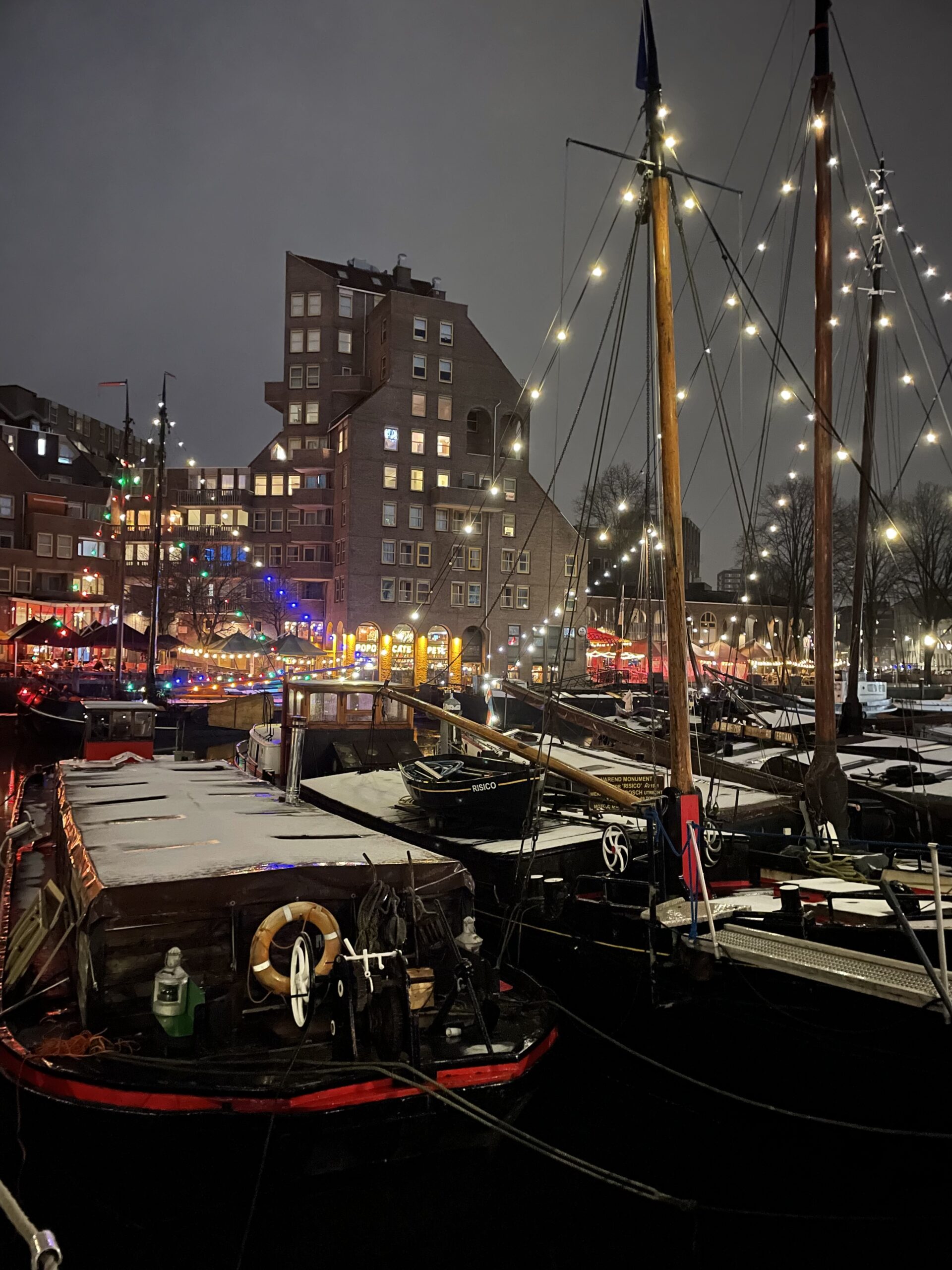
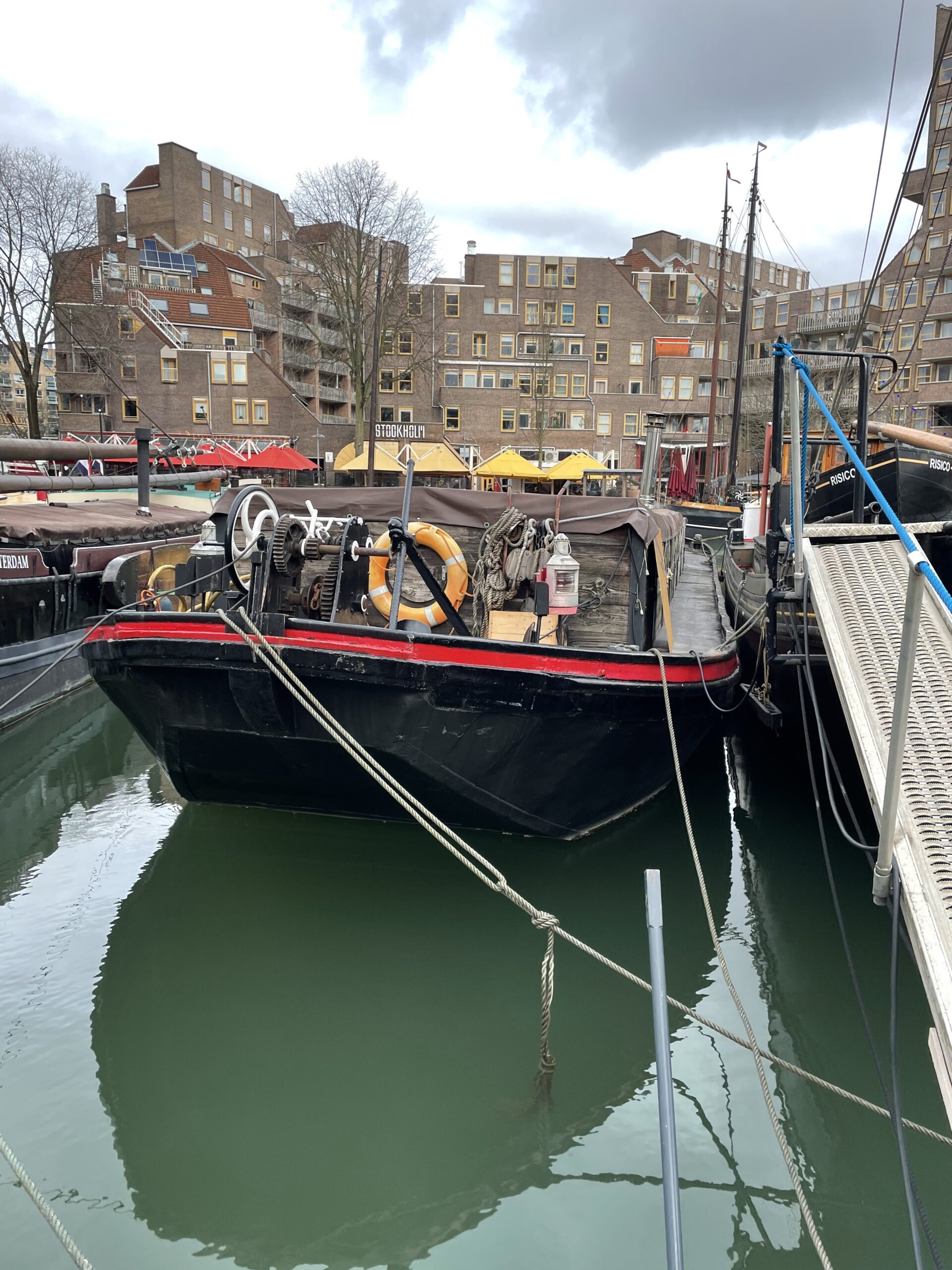
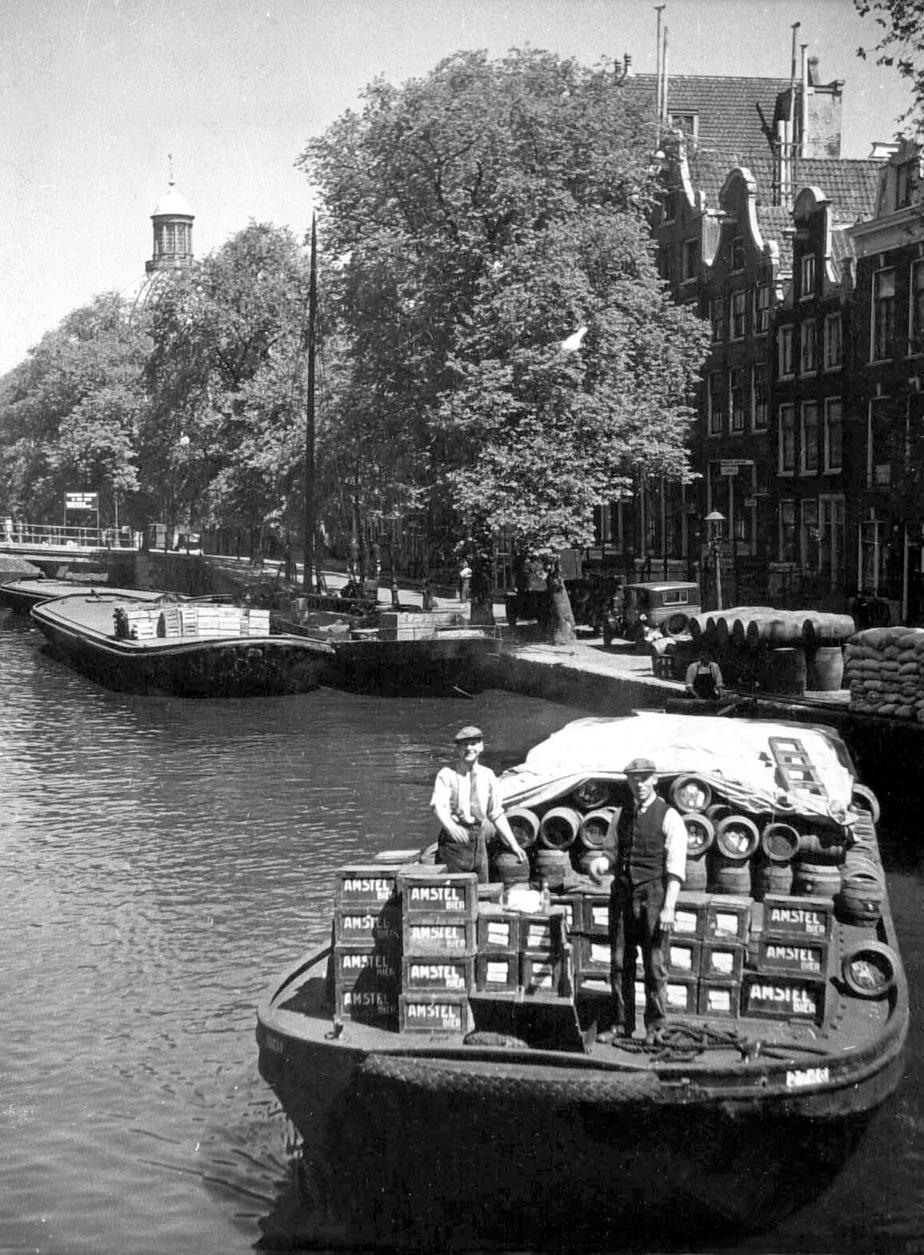
The motor barge Amstelbrouwerij III was launched in 1920 in Alphen aan den Rijn, built on commission from the Amstel Brewery in Amsterdam. The vessel was part of a series of commercial vessels specially designed for the transport of beer and related goods. From the brewery in downtown Amsterdam, these vessels transported barrels and crates of beer via the inland waterways to destinations including Rotterdam, stopping at cafés and other distribution points where the beer was delivered.
In the first half of the twentieth century, the Amstel Brewery operated a small fleet of such motorized deck barges. They played an important role in the brewery’s logistics at a time when water transport was often more efficient than road transport. The vessels had a spacious cargo deck for transporting beer and were equipped with a simple wheelhouse. This wheelhouse was collapsible, allowing the vessel to pass under low bridges in the canals and inland waterways.
The Amstelbrouwerij III was originally equipped with a hot-bulb engine, as was customary for inland waterway vessels of that period. At a later stage in its history, this engine was replaced by a Samofa two-cylinder diesel engine, a more reliable and user-friendly type of engine that was widely used in the postwar period.
Only limited information has survived regarding the ship’s subsequent history. It is known, however, that the ship was once owned by a contractor. Later, it came into the possession of Leenman of Woudrichem, who used the motor barge primarily as a storage facility. In 1998, the ship was sold to a new owner.
During this period, the ship was named Luxor, and its exterior was modified to resemble that of a traditional inland barge used for transporting bulk cargo.
After a major renovation by Jeroen Bliek, the ship eventually came into the hands of a new owner and once again bears its historic name, Amstelbrouwerij III, thereby reestablishing its connection to Amsterdam’s brewing history.